Abstract (English)
The article analyzes the economic and climatic paradox that characterizes contemporary crocieristico tourism in the Mediterranean basin. In the face of global macroeconomic data that record traffic volumes and record growth rates, local economies and ground operators denounce a strong contraction of attendance in the central hours of the day. The phenomenon, driven by the extreme waves of heat and the rising temperatures perceived, pushes passengers to the climate self-protection, reducing traditional excursions and preferring the stay on board the air-conditioned ships. This dynamic highlights a structural fracture between global flows and economic losses recorded by proximity services, imposing a profound revision of the tourist offer in response to climate change.
Abstract (English)
This article examines the economic and climatic paradox shaping contemporary cruise tourism in the Mediterranean basin. Despite global macroeconomic reports showing record-breaking passenger volumes and continuous growth, local economies and ground operators report a significant drop in foot traffic during peak daytime hours. Driven by extreme heatwaves and rising temperatures, passengers are increasingly opting for climate self-protection, choosing to stay aboard air-conditioned ships rather than exceptional traditional shore excursions. This trend highlights a structural gap between overall sector growth and local economy losses in destination services, signaling an urgent need to rethink tourism offerings in response to climate change.
While macroeconomic reports continue to record record figures for global tourism and the crocieristico sector navigates towards a constant growth — with a global forecast of the ability that aims to exceed 746 thousand beds and international flows that in many areas have largely exceeded pre-pandemia levels (ENIT-CLIA data) — the reality lived on the ground by operators, guides and local activities tells a very different story.
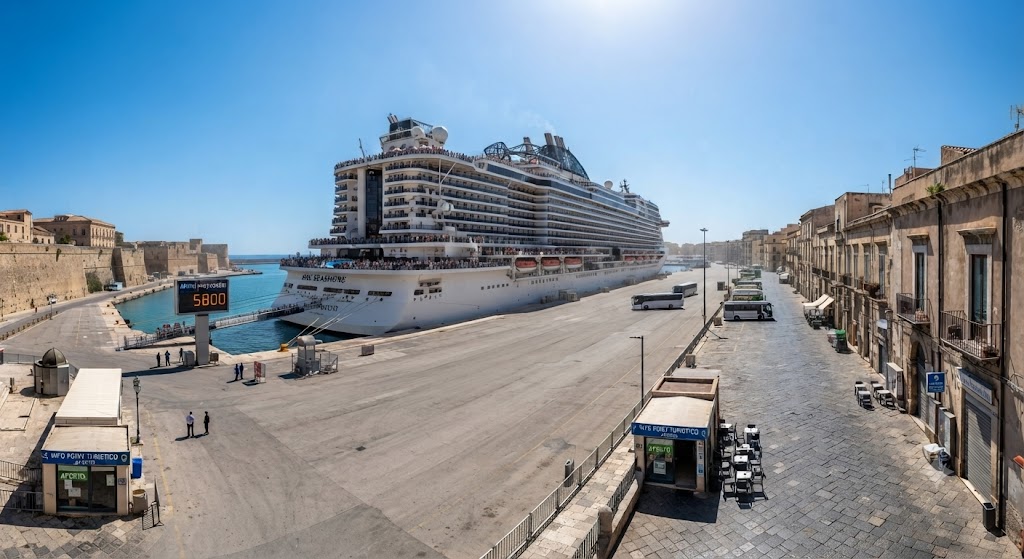
In the ports of all the Mediterranean, from Cagliari to Civitavecchia, passing through Naples, Palermo and the main Italian ports, the docks and the historical centers live a summer paradox: the ships arrive full load, but the cities appear strangely empty of passengers.
The thermometer rises, the crocieristi remain on board
The real factor of discontinuity is represented by the extensive waves of heat that periodically paralyze the continent. With average summer temperatures that in the Mediterranean basin continue to beat historical records — often recording abnormal and sea thermal peaks that touch values of 7-8 degrees higher than the seasonal norm — the response of travellers has changed radically.
The classic model of the daily excursion continues, which pushed thousands of passengers to pour into the dock immediately after the dock to face tours of citizens and archaeological sites under the scorching sun, is giving way to the climate self-protection.
- The desertification of central hours: Between 11:00 and 17:00, the hourly bands in which the afa and solar radiation touch the most critical levels, there is a drastic contraction of passengers on the ground.
- The floating refuge: Navigation companies record historically high rates of stay on board during the day. Swimming pools, insulated areas, air-conditioned spaces and internal services become the first choice of the crocierista, which prefers to give up the excursion or reduce it to rapid morning or evening movements.
A structural split in the tourist sector
This dynamic highlights an ever deeper fracture within the overall tourist economy. On the one hand the general data keep thanks to the contracts and international reservations closed with very large advance; on the other, the local economy linked to the immediate disembarkation (guide services, day catering, small commercial exercises of proximity and local transport) suffers substantial losses of turnover in the months of greater theoretical affluence.
The phenomenon is therefore not an anomaly confined to individual ports, but a structural trend that imposes on the whole sector to rethink the offer: reduced excursions, shifts oriented towards the shaded nature or closed spaces, and a programming that must necessarily count with the new climatic normality of the Mediterranean.
Sources and reference data:
- CLIA (Cruise Lines International Association): Data from State of the Global Cruise Industry Report, concerning the overall growth of crocieristica capacity, the historical record of enlivened passengers and the projections on the total beds.
- Tourism / Italian Cruise Watch answers: Reference data on traffic projections, the reception capacity of terminals and specific handling flows within the Italian crocieristici ports.
- ENIT and Meteo-Climatic Observers: Analysis of the tourist trends in the Mediterranean crossed with the summer thermal anomalies, which highlight the direct impact of the waves of heat on the behaviour of landing, the self-protection of the passengers and the use of the services on the ground in the warmest times of the day.