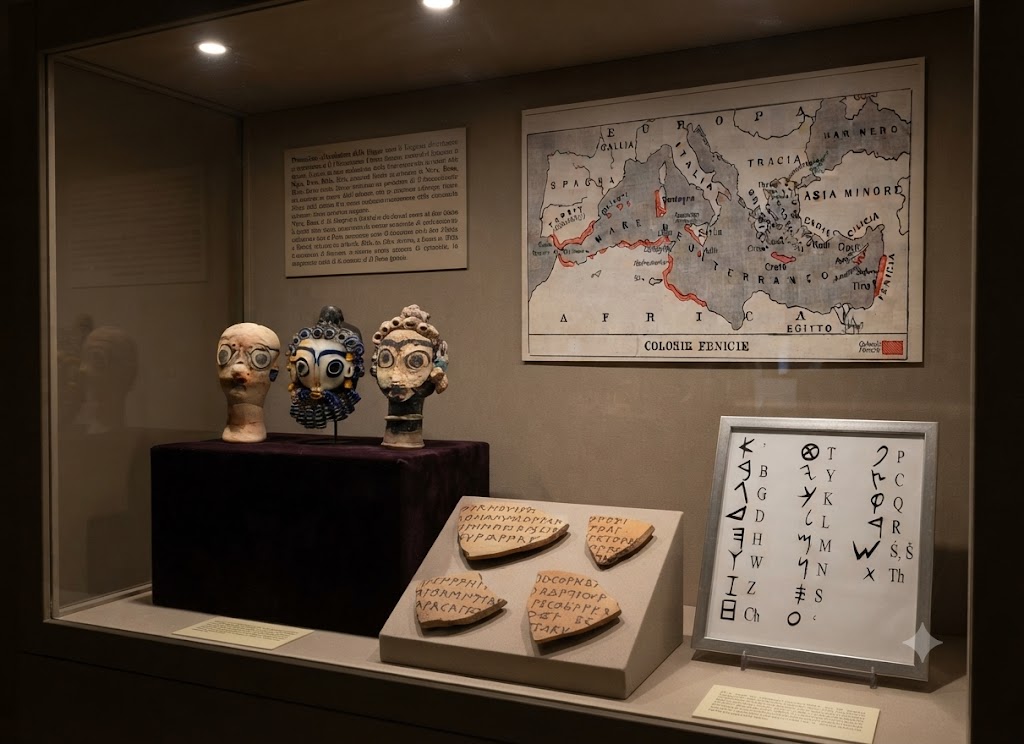
Abstract (ITA): Phoenician belongs to the Semitic languages and to the Cananaic group (from about 1150 BC); since he did not leave an indigenous literature, his grammar is reconstructed by scholars through comparison with Hebrew and linguistic comparison. I Phoenicians invented a system of 22 purely consonant signs (abjad) written from right to left, evolved from protocananaic forms and enriched over time with the use of some consonants as vocal supports (matres lectionis).The texts have come mainly on hard supports and ceramic fragments (ostraka); in this context Sardinia plays a central role in the presence of the oldest western inscriptions (Nora and Bosa) and the particular inscription of Bitia. The evolution of the language is articulated by the Phoenician of the East (Biblo and thyro-sydonian) to the Carthaginian punico, and then to the late punica/neopuni of the Corsican era and to the last testimonies in characters of the Latin-punica.
Abstract: At the Roots of the Semitic Family Phoenician belongs to the Semitic languages and the Canaanite group (starting from around 1150 ECB); since it left no native literary tradition of its own, scholars reconstruct its grammar through comparison with Hebrew and linguistic analysis. The Phoenicians invented a system of 22 qualities withsonantal signs (abjad) written from right to left, which evolved from protocanaanite forms and was united over time with the use of certain consonants as vowel supports (matres lectionis). The texts have come down to us primarily on hard surfaces and ceramic fragments (ostraka); in this context, Sardinia plays a central role due to the presence of the ancient Western inscriptions (Nora and Bosa) and the unique inscription of Bitia. The evolution of the language ranges from Eastern Phoenician (Byblos and Tyre-Sidon) to Carthaginian Punic, moving then to Late/Neo-Punic of the cursive era and finally to the latest witnesseses in Latin-Punic characters.
If there is an invisible thread connecting the coasts of Lebanon, the Sardinian trade routes and the sands of North Africa, this is undoubtedly the phoenician language. When we accompany travelers to the discovery of the past, understanding how they spoke and wrote the ancient navigators allows us to return voice to stones, monuments and amphoras that would otherwise remain silent.
But how did this language and, above all, how did its revolutionary writing evolve? Here is a complete overview to explore the first chapter of this extraordinary linguistic world.
1. To the Roots of the Semitic Family
Phoenician is not born from nothing: it belongs to the great family of semitic languages and, more particularly, to the group of cananaic languages (a branch of the Northwest Semitic).
This group includes:
THEugarita (previous and written in cuneiform characters).
The phoenician.
THEhebrew and trans-jordane languages likeammonia moabita and theedomita.
The language of Philistines in southwestern Palestine.
Since the Phoenician did not leave us an indigenous literary tradition superstitious (unlike the Hebrew Bible), to reconstruct its grammar and pronunciation, scholars rely on Hebrew and the method of linguistic comparison.
2. The Great Revolution: The Consonant Alphabet
The most extraordinary contribution of Phoenicians to the history of human culture is undoubtedly their writing system. Composed of 22 signs, each of which indicates only one consonant (consonant alphabet or abjad), the reading proceeds strictly from right to left.
From the origins to Sinai: First inscriptions (protocananaic or Early Alphabetic, dated between the late Bronze and the 11th century BC) show signs still partially figurative linked to the Egyptian world, such as those discovered in the mining site of Serabit el-Khadim in Sinai or the famous ivory comb found in Lachish in 2016.
Voice problem: Since the alphabet was devoid of vowels, time began to use some consonants ('alef, waw, yod, he and ♪) as "voice support" (the so-called matres lectionis) to facilitate reading, a custom that extended considerably in late times and in the West after the fall of Carthage (146 BC).
3. Supports and Diffusion: From the Near East to Sardinia
Phoenician texts have come mainly engraved on hard material (stone, metal, ivory and bone) as votive, funerary or monumental inscriptions. On ceramics and commercial amphoras we find painted or engraved inscriptions. A fascinating chapter consists of ostraka (ceramic shells used as "stack card"): the archive of more than 700 administrative and accounting ostrakas discovered in Cyprus, Idalion and Kition.
In this Mediterranean chessboard, sardinia plays a leading role: the island holds both the oldest western inscriptions ever (such as those of Nora and Bosa, respectively KAI 46 and ICO Sard. 18) is one of the most beautiful and mysterious testimonies, thebitia registration (II century AD, KAI 173), characterized by a unique vocal notation system and without comparison throughout the Phoenician world.
4. Phases and dialects of the Language
Scholars share the evolution of Phoenician in very precise macro-areas and chronologies:
The Phoenician of the East: Includes Biblo dialect (with its ancient and Persian stages) and standard dialect (or thyro-sydonian), spoken in the great centers of Tyre and Sidon and adopted throughout Western expansion.
The Punico: From the end of the 6th / early 5th century BC, the language develops in the West (with fulcrum in Carthage) its own characteristics, documented by thousands of inscriptions and even by theatrical texts such as the famous monologue by Annone in the comedy Poenulus by Plauto.
The Tardo Punico and the Neopunico: From the middle of the 2nd century BC, writing is streamed and simplified (frequent on ceramics and ostraka), accompanied by a strong phonetic evolution.
Latino-Punico: After the Roman conquest, the spoken language survives for a long time, witnessed exceptionally by inscriptions written in Latin characters (between the II and the 5th century AD in Tripolitania).